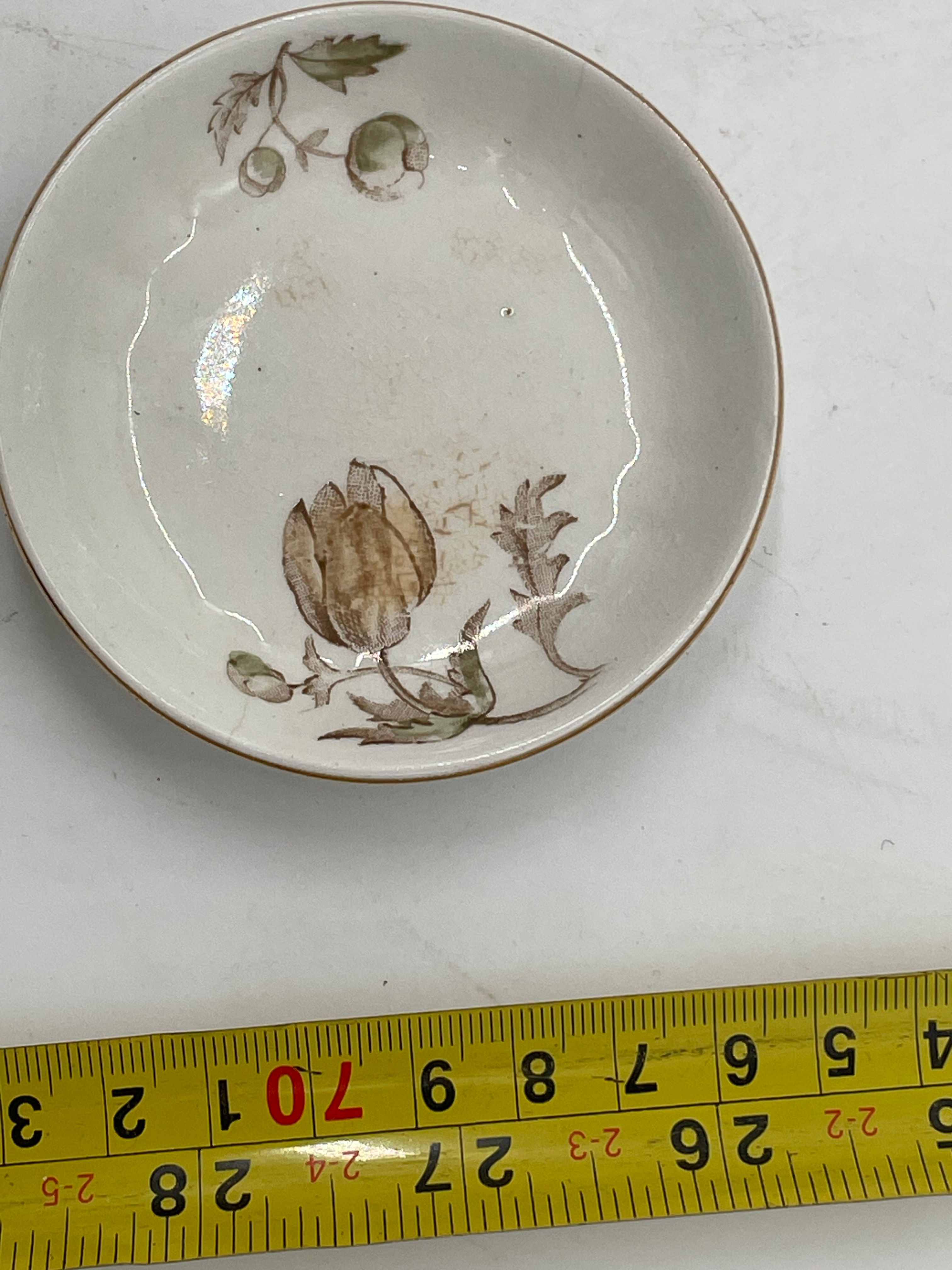

3" -unknown maker- bowl
The underside shows an unmarked, fully glazed earthenware or porcelain base with stilt marks and fine crazing, indicating it is likely an antique or vintage continental/English piece.
Key Characteristics
Absence of Maker's Marks. The base has no stamped, printed, or incised factory mark, which was common for many 19th- and early 20th-century European potteries.
Kiln Stilt Marks. Three small unglazed pinholes appear around the inner foot ring where the dish rested on kiln stilts during firing.
Glaze Crazing. Fine network cracking across the clear glaze is typical of older tin-glazed earthenware, faience, or ironstone rather than modern vitrified stoneware.
Concentric Foot Rings. The molded double-ring base and thin brown rim edge align closely with older French faience (such as Lunéville or Sarreguemines) or early English pearlware/earthenware.
This unmarked vintage hand-painted floral berry bowl typically has an estimated resale value of $10 to $25 USD as a single piece.
Because the bowl lacks a factory backstamp and exhibits age-related crazing and surface wear, its value depends on how it is marketed and its physical condition:
Valuation Breakdown
Unmarked Vintage / Antique Floral Bowl ($10–$20). Single, unmarked 5-inch hand-painted fruit or berry bowls from the late 19th to mid-20th century generally sell in this range on marketplaces like eBay and Etsy.
Attributed Antique French Faience ($20–$35). If verified as 19th-century French faience (such as early unmarked Lunéville or Sarreguemines), a single small dessert bowl in good condition can bring slightly more from collectors of French country pottery.